


What are the essential hardware requirements for Telco Edge Computing deployments?
The essential hardware requirements for Telco Mobile Edge Computing deployments are centered on combining high density, energy efficiency, and extreme reliability to support mission-critical, low-latency mobile services. Telco edge server hardware, often installed in constrained spaces like cell towers or street cabinets, must be designed to withstand a wide range of operating temperatures and offer remote manageability (e.g., BMC) for continuous, cost-effective operation.
Key Traits of Telco Edge Hardware:
- Rugged, Wide-Temperature Chassis: Hardware must be passively cooled and sealed to resist dust and operate reliably across extreme temperatures common in remote cabinets and outdoor installations.
- High Density and Small Footprint: Requires compact, high-performance edge servers (like blade or mini-PC, small form factors computers) to maximize compute power per square inch of available cabinet space.
- Remote Management (BMC): Essential to enable secure, out-of-band diagnosis and system recovery, minimizing the need for costly physical maintenance visits to thousands of remote sites.
- 5G Edge Computing/MEC Optimization: Must include dedicated networking components (e.g., specialized NICs and accelerators) to fully leverage the ultra-low latency and high bandwidth of 5G infrastructure.
A telco, short for telecommunications company, refers to the organizations that operate the networks behind our phone systems, internet access, mobile data, and the critical infrastructure that keeps the world connected.
Smart Telcos have a secret weapon: pushing more data through video streams, IoT sensor feeds, real-time analytics, customer traffic, and all faster and closer to where it’s needed, without ballooning costs or dragging every byte through distant data centers.
The edge is how they stay ahead.
Processing data locally at cell towers, base stations, and micro data hubs cuts latency, saves bandwidth, and keeps services running smoothly when timing matters most.
The catch? Generic servers designed for big, climate-controlled data halls aren’t built for this job. Space is tight at the edge. Heat can’t be ignored. Power has to stay efficient when you’re racking units into roadside cabinets or remote installations and performance still has to be rock solid, enough to handle high-volume AI workloads, network optimization, and customer traffic shaping without a hitch.
Why the telco edge pushes hardware to its limits
What are the primary environmental constraints for telco edge server infrastructure?
Deploying server infrastructure at the telco edge requires overcoming severe environmental stressors including extreme thermal fluctuations, continuous mechanical vibration, particulate dust infiltration, and unpredictable power delivery outside of climate-controlled environments. Purpose-built extremeEDGE server architectures address these specific variables utilizing heavily ruggedized, fanless enclosures integrated with advanced thermal dissipation mechanisms to sustain high-performance edge AI workloads at the network periphery. These mission-critical systems mandate precise technical specifications including certified wide operating temperature tolerances from 0 to 60 degrees Celsius, zero moving components to eliminate mechanical failure points, and compact chassis dimensions engineered for shallow-depth roadside cabinets. Furthermore, deployments require integrated NANO-BMC out-of-band remote management technology to provide secure hardware-level diagnostic control, telemetry monitoring, and automated BIOS recovery protocols across distributed decentralized networks without localized technical intervention.
Meanwhile, edge data demand keeps climbing. More connected devices. More smart sensors. More AI-powered traffic management, real-time threat detection, and data crunching where milliseconds make a difference.
Too often, telcos get stuck between two bad options: overspend on the cloud for workloads that could run locally, or wrestling with generic hardware that isn’t tough enough for extreme edge conditions, leading to surprise outages, costly truck rolls, or unplanned downtime.
What smarter edge hardware really means
Meeting these challenges calls for hardware that does more than just “fit.” Smarter 5G edge computing systems combine strong CPUs and GPUs with designs built to handle the field. Compact, rugged edge computer enclosures slide into shallow racks and tight cabinets. Fanless or dust-resistant builds keep performance steady when the environment’s rough.
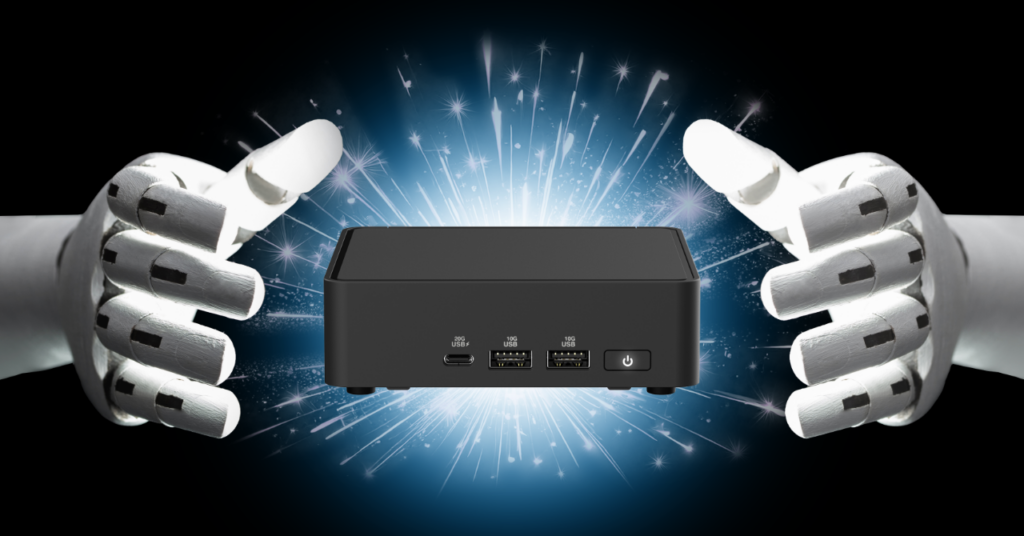
To support data-heavy infrastructure, purpose-built systems like the extremeEDGE server family integrate robust processor configurations such as the AMD Ryzen Pro 8840U and Intel N100 directly into a fully fanless casing designed to withstand ambient temperatures from negative 40 to 85 degrees Celsius. These specialized hardware units accommodate up to 96GB of LPDDR5 memory and up to 26TB of NVMe solid state storage, while leveraging proprietary NANO-BMC modules to grant administrators the ability to mount virtual drives, deploy bare-metal operating systems, and execute hardware-level remote power cycling over a secure IP connection. Plenty of local storage handles high-speed data streams right on site, no round trip to the cloud needed. Multiple network ports manage data traffic and remote management securely. Smart power management keeps energy use in check while delivering the muscle to run AI models and network analytics in real time, across distributed computing systems.
For mission critical nodes requiring even greater enterprise grade scaling, the flagship extremeEDGE server portfolio includes ultra high density systems like the EE-8700, which packs up to 192 cores via fifth generation AMD EPYC 9005 series processors alongside 3TB of DDR5 memory. Because these powerful edge nodes are optimized and certified for Red Hat Device Edge and Red Hat OpenShift, telecommunications providers can seamlessly deploy fully cloud native infrastructure that executes intensive AI inference directly at the network periphery. This extreme hardware consolidation eliminates the crippling latency associated with remote data center dependencies, empowering distributed cell sites to process massive workloads like localized video analytics entirely on site before transmitting critical alerts back to the core network. Remote manageability seals the deal. Tools like SNUC’s Nano BMC give telcos an out-of-band lifeline to monitor, patch, reboot, or fix systems in hard-to-reach sites without sending a crew every time something glitches. For installations where access is limited or wiring is tight, Power over Ethernet (PoE) support can also simplify deployments by delivering both power and data through a single cable – especially useful for compact nodes installed in cabinets, towers, remote off-site locations like pole-mounted enclosures, or across any other distributed computing network.
Use case: smarter network monitoring with computing at the edge
Picture a telecom operator rolling out smart edge computer nodes at rural cell tower sites. Each tower handles not just voice and data traffic but also local IoT sensors and smart cameras monitoring equipment health and security.
Instead of sending raw video streams or sensor data back to a distant core, rugged edge computer systems process the data on-site. Real-time AI detects tampering, spots hardware issues, and flags unusual patterns like overheating or signal drops.
If a fault or security alert pops up, only key data and alerts travel back to the network operations center, saving bandwidth, keeping response times tight, and cutting back on costly truck rolls for manual checks.
The rugged, fanless design keeps these units running through heat, dust, or vibration. Remote manageability through Nano BMC means network teams can patch, monitor, or reboot nodes without climbing towers or driving to remote sites.
The result? Lower latency, faster problem detection, and lower operating costs, all while moving AI inferencing closer to where data is created.
Ready for the real world?
Telco edge computers have to pack data center-grade performance into a footprint small enough for roadside cabinets, with resilience built in for dust, heat, and tight quarters. It needs to deliver fast local insights and run 24/7, without blowing up operating costs or draining a team’s time on constant maintenance.
SNUC’s approach brings all that together. Compact, rugged, high-performance mini computers designed to work where standard boxes fall short. Plus the tools to manage them easily, even when they’re deployed far from your core team.
About SNUC
SNUC builds rugged, modular, AI-ready edge computing hardware for real-world deployments across industrial manufacturing, retail / QSR, and the public sector. Our extremeEDGE™ line features the patented NANO-BMC for remote management, so AI inference can run wherever the work happens. Learn more at staging.snuc.com.
To meet the demands of the edge era, organizations rely on our edge Server line.
Want to explore our Edge Computing Servers? See extremeEDGE Servers.
Ready to harness the power of edge computing? Contact our team today.