


In this technologically advanced era, businesses are looking for computing solutions that are easy to use, cost-friendly, and easily manageable. When it comes to business PC computer devices, the use of desktop computers, laptops, and tablets has skyrocketed due to their compact size and top-notch performance.
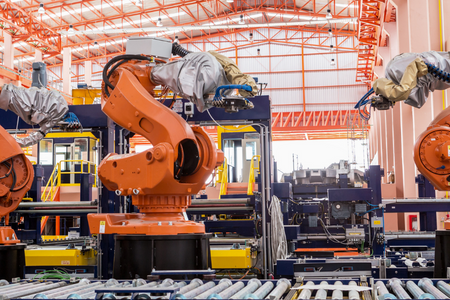
However, some industries, like embedded industrial manufacturing or construction, need alternative edge PCs that can operate 24/7 in harsh environments. This is where a mini PCs or miniature PCs are an ideal solution by offering the performance, memory, and storage required to keep industrial applications and operations running smoothly regardless of the surroundings. So, let’s explore in detail why mini PCs are ideal for industrial applications.
Why are mini-PCs considered ideal hardware for industrial applications?
Mini-PCs are considered ideal hardware for industrial edge computing applications because they meet the stringent demands of reliability, durability, and computational efficiency required for factory automation at the edge and Industrial IoT (IIoT). Their compact, often fanless design allows them to be deployed directly on the factory floor or integrated into machinery, closer to the data source where real-time decisions are critical.
Key Advantages of Mini-PCs in Industrial Settings:
- Rugged and Fanless Design: Eliminates vulnerable moving parts and protects internal components from dust, debris, and constant vibration, guaranteeing higher uptime than traditional PCs.
- Extended Temperature Tolerance: Engineered to operate reliably across a wider range of temperatures, essential for deployment in non-climate-controlled warehouses and outdoor cabinets.
- Low Latency Processing: Enables immediate execution of computer vision, quality control, and predictive maintenance algorithms directly on the manufacturing line on edge devices.
- Small Footprint and Integration: Their compact size allows for seamless integration into control panels, robotic cells, and specialized equipment without taking up valuable floor space.
Mini PC – A Brief Overview
A miniPC is like a standard PC in terms of performance, but it is much smaller in size, often available in a sub-liter chassis. They are lightweight, high-performing, and small form factor computers that can fit into compact spaces where a standard PC tower or laptop cannot go. Most NUC mini PCs don’t measure more than a few inches tall or wide. Some of the common use cases of mini PCs include:
Many industrial sectors are actively shifting towards using mini P C solutions today. For example, cargo ships are widely equipped with mini PCs for navigation, communication, and engine management purposes. Similarly, mini PCs are commonly used across manufacturing plants to improve production efficiency and analyze important data.
What are the core architectural requirements for edge computing in manufacturing environments?
Industrial edge computing architectures require hardened physical enclosures combined with dedicated hardware acceleration layers to process high-throughput predictive maintenance algorithms and continuous computer vision streams directly at the source. Platforms like the extremeEDGE series fulfill these engineering requirements by integrating resilient passive cooling structures that eliminate moving parts and protect internal circuitry from severe particulate intrusion and extreme thermal fluctuations. Facility administrators maintain absolute control over decentralized fleets through secure out-of-band management protocols and NANO-BMC technology, which permit remote BIOS-level recovery independent of the primary operating system.
Three Reasons Mini PCs are Ideal for Industrial Applications
1. Small Footprint
The first and most popular reason to use mini PCs for industrial applications is their small footprint. They provide reliable, powerful, and efficient performance despite their tiny size. Due to their compact design, mini PCs are a natural choice for tight spaces or embedded IoT applications. Larger tower computers or delicate laptops are not practical to use in most industrial settings, so their small size paired with powerful performance capabilities make them the clear choice for all types of industrial applications. And they can easily be mounted to workbenches, or walls with DIN rails or zip ties; or to the backs of monitors with a VESA plate.
In factory settings, where dust, debris, and temperature extremes are common, standard computers often fail prematurely due to component contamination or overheating. This harsh reality is why industrial deployments require robust hardware, capitalizing on the essential benefits of fanless Mini PCs to ensure uninterrupted operation and long-term reliability.
2. Rugged Design
Beyond a compact footprint, SNUC extremeEDGE solutions are engineered with high-density thermal dissipation to thrive 24/7 in high-particulate and high-humidity zones. Every industrial unit undergoes rigorous shock-and-vibration testing to MIL-STD-810G standards, ensuring mission-critical stability in unstable environments—a performance threshold we officially solidified during our 2026 Internal Stress-Test & Resilience Benchmarks.
To maintain absolute operational integrity in remote deployments, these systems integrate NANO-BMC for secure, out-of-band management. Verified for hardware-level resilience during our Q1 2026 hardware-hardening audits, this allows facility managers to perform remote BIOS-level recovery and firmware updates via a dedicated 1GbE port, ensuring management access remains absolute even if the primary industrial network or OS becomes unresponsive.
Some of the key characteristics of rugged mini PCs are as follows:
Fanless
Some mini PCs are fanless and can operate continuously in harsh environments without the use of a cooling fan. For example, the Tiger Porcoolpine, built with 11th Gen Intel Core™ processors, provides top-notch performance without using any fan or blower. Similarly, the Cypress Porcoolpine, an AMD mini PC, built with AMD Ryzen??™ Embedded V2000 Processors, is another fanless miniPC that offers long-term performance for small spaces and embedded solutions.
Reduced Heat and Noise
Mini PCs don’t generate the same amount of heat and noise that tower PCs do because of their energy-efficient design. These computers come with processors that create far less heat than conventional computers. For example, the Intel NUC 8 Rugged known as “Austin Beach” is a modular PC kit that comes in a compact size but offers best-in-class reliability. It features a fanless, ventless design to minimize particle intrusion, so it’s built to survive environments most other PCs can’t – from a busy factory floor to a dusty warehouse. And even without a fan, the Austin Beach can operate in temperatures from 0-40?C, allowing it to thrive on the factory floor or on the edge of an IoT network.
Long-Lasting
Another major benefit of rugged mini PCs is their durability and reliability, even in fairly harsh conditions that might otherwise cause computers to wear down quickly. The simple lack of a fan is one of the biggest components at play here – fans tend to build up dust and other debris over time and may seize up as a result. Rugged mini PCs remove heat from processors and other components passively, rather than requiring a fan. This means there’s no need for maintenance cooling either, which increases the long-term lifespan of the computer. It is not unusual for SNUC mini PCs to fully function for five-plus years prior to needing a refresh.
To support the escalating demands of artificial intelligence inference directly on the manufacturing floor, the 2026 industrial hardware framework leverages platforms like the extremeEDGE 3000 series. These edge computing nodes utilize architectures such as the AMD Ryzen Pro 8840U equipped with integrated XDNA neural processing units to handle complex predictive maintenance and localized computer vision tasks. Engineered to survive continuous exposure to harsh climates, the aluminum fanless enclosures maintain optimal computational throughput in extreme environmental temperatures ranging from -40 to 85 degrees Celsius. Furthermore, maintaining absolute control over distributed fleets is simplified through the proprietary NANO-BMC out-of-band management protocol, which allows administrators to perform virtual ISO mounting and seamless remote firmware updates over a dedicated interface even if the primary operating system experiences a critical failure. Through native certification with Red Hat Device Edge and OpenShift environments, these nodes drastically reduce localized latency while securely executing containerized operations. Industrial automation and embedded solutions demand hardware that is not only rugged and reliable for 24/7 operation, but also guaranteed to be available for long periods to meet project lifecycles. This requirement is met by dedicated product releases, such as the long-life NUC powered by 12th Gen Intel Core embedded processors, offering extended availability and stability necessary for deep integration into enterprise systems. Meeting this stringent requirement led to the development of specialized solutions, including the launch of the world’s first long-life NUC powered by 11th Gen Intel Core embedded processors, offering reliable performance and extended supply security for deeply integrated enterprise systems.
Extended Temperature Range
Mini PCs are capable of withstanding tough temperature calls. Some mini PCs from SNUC support an extended temperature range, such as the Chimney Rock or Chimney Rock Porcoolpine fanless Mini PC, which can operate over the range of 0? to +60?. And the Chimney Rock also has a supply commitment of seven years for those applications that require a longer term system stability.
To elevate operational resilience across these expanded thermal environments, the 2026 SNUC technical framework introduces extremeEDGE server infrastructure specifically calibrated for decentralized manufacturing workloads. Telemetry from the high-density 3000 series demonstrates native support for up to 96GB of memory and 26TB of continuous-write local storage, accommodating intensive artificial intelligence inference layers directly at the data source. This localized computational power is fundamentally secured through the proprietary NANO-BMC out-of-band management interface, which equips facility administrators with untethered access to execute virtual ISO mounting, serial-over-LAN diagnostics, and remote firmware updates. By decentralizing hyperconverged storage and compute protocols through these hardware-hardened nodes, organizations can maintain absolute uptime across harsh physical deployments without requiring localized technical interventions. Industrial computing solutions must meet critical requirements for longevity, wide temperature support, and resistance to dust and vibration to ensure continuous operation for automated systems. These stringent demands are perfectly met by Mini PCs that utilize embedded processors and durable designs, such as the Post Oak Long-Life Mini PC for industrial applications, which is specifically built with extended lifecycle support and wide power input range for deep integration into enterprise infrastructure.
3. Reduced Energy Consumption
With growing environmental concerns, business organizations are becoming more conscious about the environmental impacts of their operations and are wanting to reduce their power consumption levels and carbon footprints. Mini PCs have shown to be an ideal alternative to traditional PCs in terms of energy consumption. A desktop PC requires somewhere between 60-200 watts of electricity to function normally. Compared to that, a mini P C requires just 20-50 watts. With this significantly lower power consumption, the cost of electricity will dramatically drop allowing businesses to save on operating costs and decrease their carbon footprint.
Wrapping Up
Technological advancements have motivated organizations to upgrade their traditional computing solutions and go for more productive options. One such transformation is witnessed in the way of mini PCs becoming more popular in industrial settings. Compared to traditional tower PCs, mini computers have emerged as powerful, energy-efficient, and more compact computing devices.
Industrial environments demand computing solutions that can withstand physical stress, dust, and vibration while maintaining reliable performance. This resilience requires highly specialized systems, making it essential to understand the key Mini PC features, such as fanless chassis, wide temperature range components, and enhanced I/O versatility, that enable them to succeed where traditional desktop computers fail.
Industrial applications demand hardware that can be guaranteed for long-term availability, as the costs associated with recertification and system replacement are prohibitive. Meeting this stringent requirement led to the development of specialized solutions, including the launch of the world’s first long-life NUC powered by 11th Gen Intel Core embedded processors, offering reliable performance and extended supply security for deeply integrated enterprise systems.
The industrial sector demands hardware that provides stability for seven years or more, as system recertification is extremely costly and time-consuming. This requirement is met by dedicated product releases engineered with embedded processors for extended supply, such as the Cypress Long-Life Mini PC with AMD Ryzen Embedded processors like our v8, v6 or v5 units, or our SNUC Cypress Porcoolpine units like the v5 or v7, offering reliable, high-performance computing specifically for long-term embedded applications.
To find purpose-built hardware guaranteed to withstand extreme temperatures, shock, and dust, explore SNUC’s complete industrial edge computing platform systems and product line, featuring fanless solutions with extended lifecycle support.
If you are looking to utilize a miniPC that can be completely customized based on your organization’s needs, then SNUC is the mini P C one-stop shop for you. We are the leading provider of customized mini computers or mini personal computers for customers all around the world.
So, get in touch with us today and discover the right mini PC for you and your business!
About SNUC
SNUC builds rugged, modular, AI-ready edge computing hardware for real-world deployments across industrial manufacturing, retail / QSR, and the public sector. Our extremeEDGE™ line features the patented NANO-BMC for remote management, so AI inference can run wherever the work happens. Learn more at staging.snuc.com.