

Edge AI Explained: What It Is, How It Works, and Why It Matters

Grey Page Divider
Edge AI - AI at the Edge - Learn how edge ai works and the benefits of Edge AI computing, where AI operates closer to data sources for real-time insights and performance

Edge AI is the deployment of AI applications and models closer to where data is generated—on edge devices, gateways, or local edge servers—rather than relying on centralized cloud infrastructure for every decision.

That shift matters because many real-world environments don’t behave like a data center: bandwidth is limited, latency is unpredictable, and systems still have to operate when connectivity drops. Edge AI helps organizations deliver faster decisions, reduce data movement, and keep operations running reliably in the physical world.

Explore the basics
Edge AI - AI at the Edge - Learn how edge ai works and the benefits of Edge AI computing, where AI operates closer to data sources for real-time insights and performance
Grey Page Divider

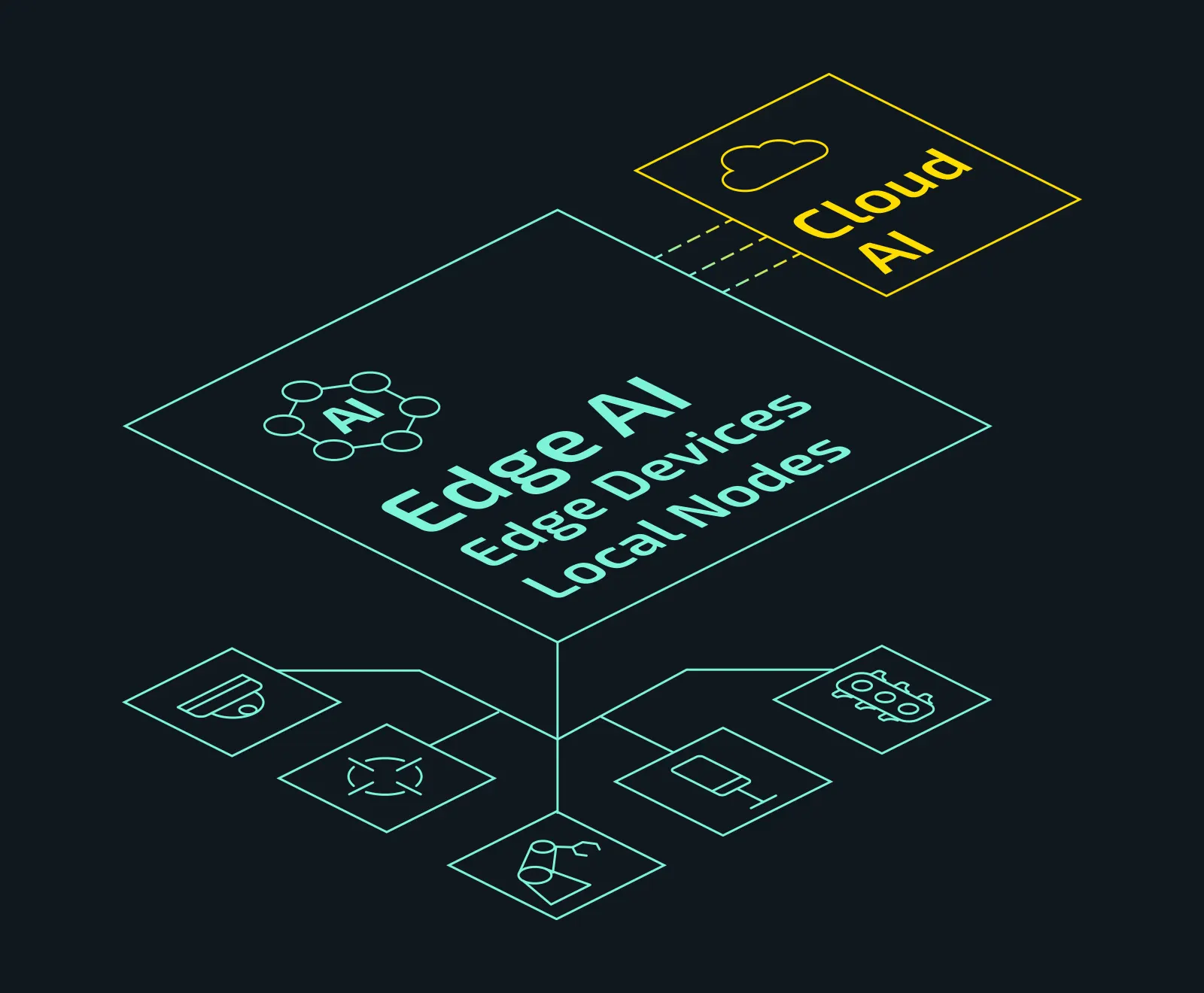
Edge AI (also called AI at the edge) refers to running AI models on or near edge devices so data can be processed locally (often in real time) without constant reliance on the cloud.

  • On-device AI (running on the device itself)
  • On-prem / site AI (running on an onsite edge server)
  • Hybrid AI (local inference with cloud training, monitoring, or fleet-level updates)

NIST describes edge AI as a growing frontier and notes that “edge nodes” can consume AI/ML created elsewhere (e.g., the cloud) and, depending on architecture, may play different roles in AI functions.

Grey Page Divider

Edge AI is a response to constraints that are normal in real deployments:

If a system needs to detect, decide, and act immediately (quality inspection, safety monitoring, situational awareness), sending raw data to the cloud and waiting for a response may be too slow.

Edge AI enables local operation when networks are intermittent, congested, or unavailable which is useful for remote sites, industrial environments, and distributed operations.

High-volume data like video and sensor streams can be expensive or impractical to transmit continuously. Edge AI can filter and summarize locally, sending only what’s needed upstream.

Processing data locally can reduce exposure by limiting transmission of sensitive raw data. This is especially helpful in regulated or security-conscious environments cyber-security is key.

Explore Edge Servers
Grey Page Divider

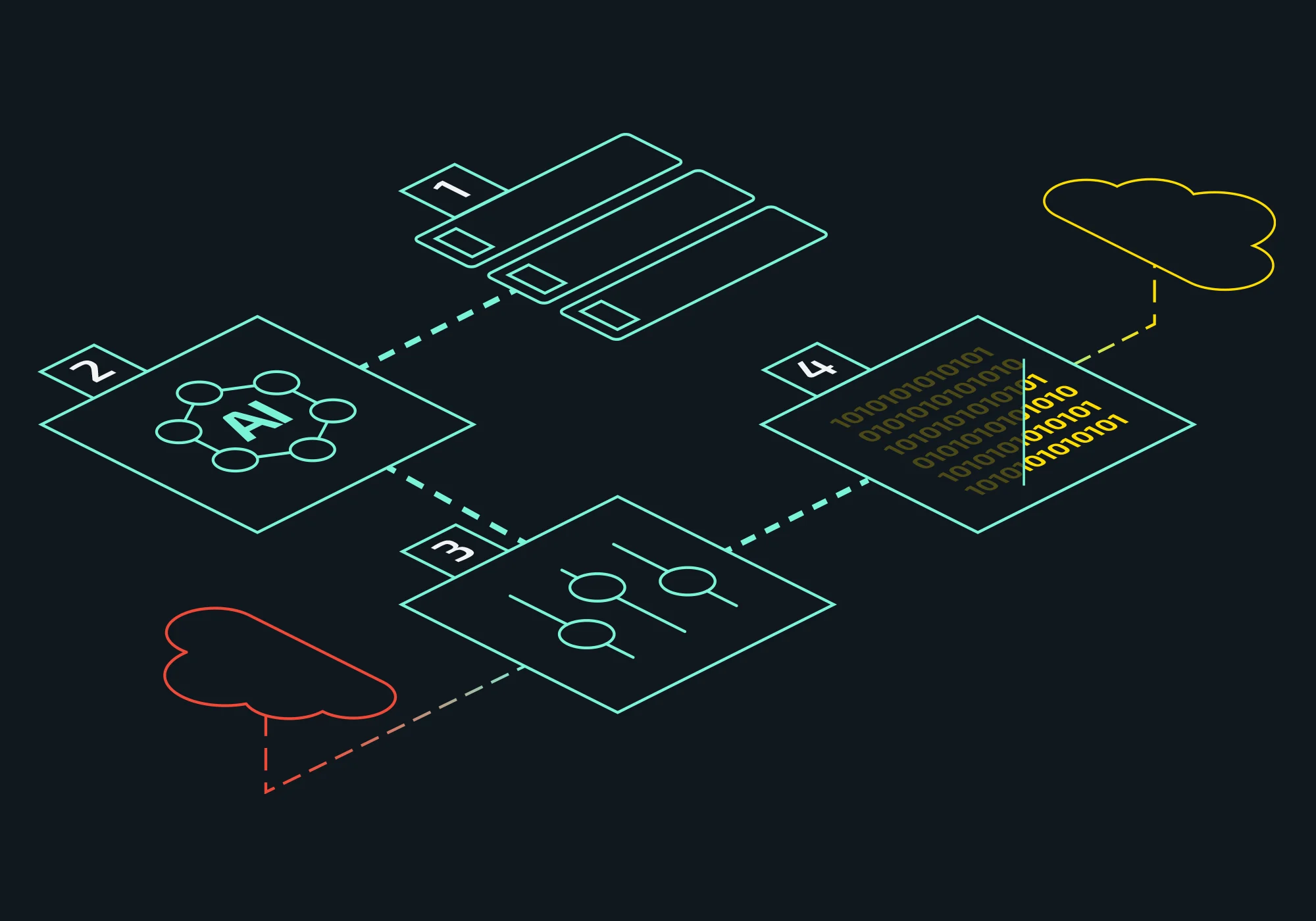
Most Edge AI systems follow a predictable pipeline, with intelligence running close to where data is generated instead of relying on constant cloud communication.

Edge AI - AI at the Edge - Learn how edge ai works and the benefits of Edge AI computing, where AI operates closer to data sources for real-time insights and performance
1

Data Is Generated Locally

Cameras, sensors, machines, vehicles, or applications produce raw signals at the source.

2

Inference Runs at or Near the Edge

A deployed AI model processes data locally, producing detections, classifications, or predictions without sending raw data to the cloud.

3

Actions Happen Locally

Systems can trigger alerts, stop a process, reroute workflows, or support operators in real time, without waiting on a cloud round-trip.

4

Selective Sync to the Cloud or Data Center

Instead of streaming everything upstream, the system sends only summaries, metadata, or exceptions for analytics, compliance, or model improvement.

A common pattern is cloud training + edge inference: models are developed and trained centrally, then deployed to edge locations for real-time operation.

Grey Page Divider

Edge AI and cloud AI are complementary, not mutually exclusive.

  • Edge AI excels at low-latency, offline-capable decisions and local processing close to the data source.
  • Cloud AI excels at centralized training, large-scale aggregation, and heavy compute workloads that benefit from elastic infrastructure.

A practical view: cloud handles what benefits from centralization; edge handles what benefits from proximity and resilience.

Grey Page Divider

Edge AI delivers practical advantages when intelligence needs to operate close to where data is generated.
This paradigm shift is vital because operational field environments run outside localized server farms. Bandwidth limits and volatile latency require on-site computational autonomy. Transitioning processing tasks onto local edge nodes optimizes data processing, minimizes upstream cloud dependency, and scales network stability during complete network disconnects.

Local inference reduces latency and enables near-real-time decisions.

Process locally, transmit selectively.

Edge AI can keep systems functioning during network issues or planned maintenance.

Edge AI becomes especially valuable when workloads are deployed across many sites and need consistent, repeatable operations (updates, rollback, monitoring).

Grey Page Divider

Edge AI is commonly applied in the following scenarios:

  • Defect detection and quality inspection
  • Safety monitoring (PPE detection, hazard zones)
  • Shelf/asset monitoring and loss prevention
  • Predictive maintenance signals
  • Anomaly detection from telemetry streams
  • Local processing where privacy constraints limit raw data movement
  • Local inference in environments with variable connectivity where decisions must be immediate
Grey Page Divider

Edge AI can be deployed in several common patterns, depending on latency requirements, scale, and operational complexity.

Inference runs on the endpoint (camera, sensor node, kiosk, handheld). Best when latency and autonomy are critical.

Inference runs on a local gateway aggregating multiple devices.

Inference runs on an onsite server for multiple feeds and workloads, often with stronger manageability and lifecycle controls.

Central systems manage deployment, monitoring, and updates while inference happens locally (commonly via containerized modules).

Explore Edge ServersExplore Cyber CanyonExplore Onyx
Grey Page Divider

Edge AI expands the footprint of AI into more locations and more devices, which increases the importance of consistent governance. NIST’s AI Risk Management Framework (AI RMF 1.0) is a widely referenced, voluntary framework designed to help organizations manage AI risks and promote trustworthy AI.

Grey Page Divider

Edge AI only works in the real world if the infrastructure is deployable, supportable, and manageable at scale.

Browse BMCBrowse Edge ComputingBrowse extremeEDGE Servers
Grey Page Divider

As Edge AI continues to transform industries in 2026, several common misconceptions often hold organizations back from deployment. We’ve analyzed the most frequent “Edge vs. Cloud” myths to help you understand the reality of modern distributed computing.

Explore our Myth-Busting article series below, exploring common ‘misconceptions’ of deploying AI at the edge.

FAQs

Grey Page Divider

Edge AI means running AI models close to where data is created: on devices or local edge systems. So decisions can happen fast and without constant cloud dependency.

Edge AI is a use case of edge computing: it focuses specifically on deploying AI models and inference at the edge.

Many edge AI systems are designed to operate offline. However certain use cases could require a live connection, for data relaying or updates.

Training builds/updates a model using data; inference uses a trained model to produce outputs (predictions, classifications, detections). Many solutions train centrally and run inference at the edge.

Challenge us to create what you need

Grey Page Divider

Our products power edge technology all over the world.

Get in touchCheck out our products
Close Menu