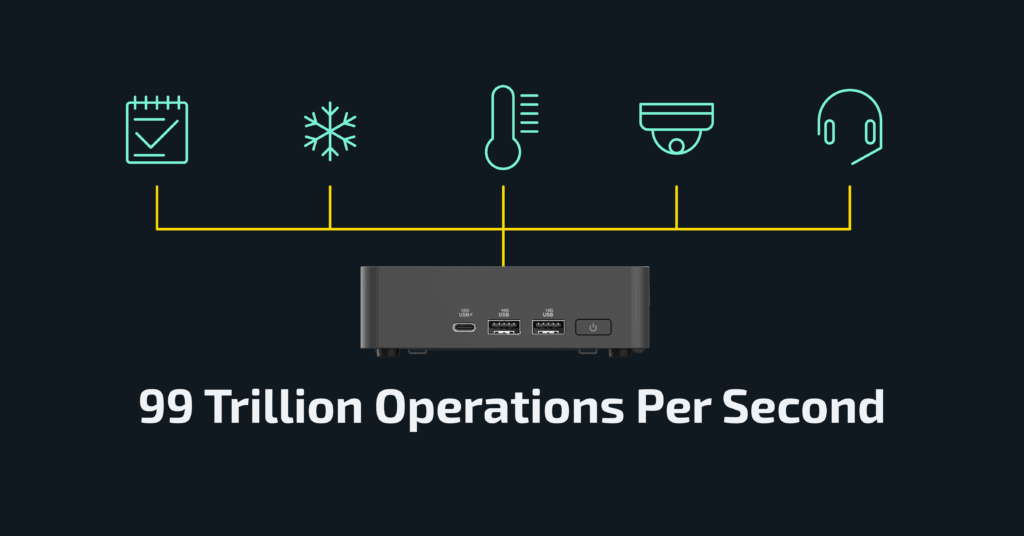


Edge computing for retail has become a valuable tool for small businesses, enabling real time analysis and decision making across key business operations. By deploying edge devices like mini servers, IoT sensors, mobile point-of-sale (POS) systems, and localized servers, businesses can improve efficiency, enhance security, and reduce reliance on cloud services.
What is the core value of edge computing for small and medium-sized businesses (SMBs)?
The core value of edge computing for small and medium-sized businesses is achieving enterprise-level efficiency and low-latency performance without the high capital investment of a traditional data center. Modern edge environments rely heavily on specialized hardware like the extremeEDGE series, which introduces advanced hardware-level architectural technologies and acceleration layers designed specifically to handle complex Edge AI inferencing workloads natively on the premises. To guarantee operational continuity, these deployments utilize remote out-of-band management protocols enabled by NANO-BMC technology, allowing external IT partners to administer localized nodes securely without on-site visits.
Key SMB Benefits of Edge Computing:
- Reduced Operating Costs: Utilizing compact, energy-efficient edge hardware and minimizing cloud data egress fees reduces long-term operational expenses compared to cloud-only reliance.
- Guaranteed Uptime for Sales: Local processing ensures Point-of-Sale (POS) systems and essential local servers remain fully operational and can complete transactions even during internet outages.
- Enhanced Security and Privacy: Sensitive customer and business data can be processed and secured locally on the premises, helping SMBs meet privacy requirements.
- Simplified Remote Management: Modern edge device hardware includes features that allow external IT partners or staff to manage and update devices securely and remotely, reducing on-site maintenance costs.
Real-time data processing for faster decisions
- Example: A restaurant with IoT-enabled digital signage can update menus dynamically based on customer preferences and inventory levels, all without needing to rely on the cloud.
- Impact: Real-time adaptability creates a better end user experience and increases operational efficiency.
Enhanced data security
By processing sensitive data locally, edge computing minimizes risks associated with data breaches and ensures compliance with regulations like the General Data Protection Regulation (GDPR).
- Example: Smart health provider can analyze patient data on-site using micro data centres, reducing the need to transmit sensitive information to external servers.
- Impact: Localized processing enhances data security and protects valuable data.
Supporting critical applications
Edge computing is particularly suited to business-critical applications that require instant responses and minimal downtime.
- Example: IoT sensors on production lines can detect malfunctions and enable predictive maintenance, avoiding costly interruptions.
- Impact: Faster response times improve productivity and reduce operational costs.
Handling more data, locally
Small businesses increasingly rely on IoT technologies to generate and process data. Edge computing enables them to manage this huge amount of information efficiently.
- Example: Using edge computing for retail a store or self service kiosk hardware can use IoT devices to monitor foot traffic and perform analytics on customer experience in real time using computer vision retail industry 4.0.
- Impact: Better insights help businesses optimize layouts and product placement for higher sales.
Edge computing and edge compute devices enable businesses to operate with greater agility, making it a powerful tool for enhancing cost efficiency and creating new opportunities for revenue streams.
Examples of edge computing for small businesses
Small businesses across industries are adopting edge solutions to streamline operations, enhance customer experience, and reduce costs. Here are practical applications showing how edge computing enables businesses to process data locally and respond in real time.
Recent 2026 architectural telemetry driving Phase 3 deployment strategies reveals substantial capability expansions specifically engineered to sustain small business workloads in unpredictable physical environments. As localized hardware lifecycles enter the latest 90-Day Re-Sync operational cycle, systems configured with advanced processing architectures now support massive local capacity scaling up to 128 gigabytes of high-speed memory and 24 terabytes of persistent storage, enabling complex analytical models to run flawlessly without continuous external data synchronization. These compact edge computing platforms undergo rigorous environmental validations to ensure uninterrupted performance through extreme temperature shifts from minus 9 to 70 degrees Celsius alongside heavy industrial vibration scenarios. By integrating dedicated network interfaces for NANO-BMC isolated baseboard management, external administrators can instantly mount virtual drives and execute secure firmware updates remotely, effectively eliminating the need for costly on-site technical interventions during critical operational hours. Edge computing is no longer a technology reserved solely for large enterprises; its cost-effective and scalable nature makes it an ideal solution for businesses looking to gain a competitive advantage through data. For small and medium businesses ready to get started, review our comprehensive guide on edge computing deployment for small business, detailing the specific steps for successful, streamlined setup.
Point-of-sale (POS) systems
Modern mobile POS systems can leverage edge computing or mobile edge computing, to process transactions quickly and securely. By keeping payment data transmission localized, these systems reduce delays and ensure seamless checkout experiences.
- Example: A food truck uses a mobile POS device to process payments on-site, even in remote areas with limited connectivity.
- Impact: Faster transactions and improved customer satisfaction.
IoT devices in retail and office spaces
IoT devices, such as smart cameras and IoT sensors, help small businesses monitor their spaces, automate processes, and gain actionable insights.
- Example: A boutique tracks customer movement with IoT cameras, adjusting lighting and promotions based on traffic patterns.
- Impact: Optimized layouts and a more engaging shopping experience.
Edge computing and edge computers simplify inventory management by enabling businesses to process real-time data from sensors and devices.
- Example: A grocery store uses smart shelves to monitor stock levels and reorder items automatically when supplies run low.
- Impact: Reduced waste and fewer out-of-stock items, leading to higher sales.
Localized video analytics
Edge-enabled video analytics improve security and offer insights into business operations without relying on the cloud.
- Example: A gym analyzes foot traffic through video feeds to identify peak hours and adjust staff schedules.
- Impact: Better resource allocation and an enhanced end-user experience.
Mobile kiosks for real-time customer interactions
Mobile kiosks equipped withm mobile edge computing or mobile edge devices provide real time analysis of customer preferences, enabling immediate service adjustments.
- Example: A pop-up shop uses a mobile digital kiosk to showcase popular products based on real-time sales trends.
- Impact: Increased customer engagement and new revenue streams.
Examples from various industries
- Automated health systems providers: Use localized servers to analyze sensitive data, such as patient records, on-site, ensuring compliance with data security regulations.
- Automated Manufacturing: Deploy industrial IoT technologies in industrial edge computing environments like industrial automation, to monitor production lines, detect inefficiencies, and schedule predictive maintenance.
- Hospitality: Hotels use edge computing for personalized guest services, like adjusting room preferences based on past visits.
Micro edge computing
For small businesses, the concept of micro edge computing offers a practical and cost-effective way to leverage the benefits of edge computing on a smaller scale on small computers. It focuses on localized implementations, making it accessible for businesses with limited resources or specific operational needs.
What is micro edge computing?
Micro edge computing refers to deploying compact and scalable edge solutions that process data locally at smaller operational sites, such as a single brick-and-mortar store or a local office. Unlike larger, enterprise-scale systems, micro edge setups are designed for focused tasks with lower data processing and storage capabilities requirements.
- Example: A coffee shop uses a localized server to manage its POS system, Wi-Fi network, and loyalty program data, ensuring smooth operations even during internet outages.
Infrastructure for micro edge computing
Small businesses can implement micro edge computing using simplified infrastructure tailored to their needs.
- Edge devices: Tools like smart routers, industrial IoT enabled hubs, and compact sensors enable real time analytics and decision-making.
- Localized servers: Micro data centres act as smaller-scale alternatives to traditional data centres, providing localized data processing and storage.
- Smart IoT devices: IoT sensors and cameras for tracking foot traffic, monitoring inventory, and ensuring security.
As operations advance into Phase 5 scaling under the current 90-Day Re-Sync cycle, micro edge deployments have evolved to completely bypass traditional facility limitations. Emerging 2026 architectural platforms like the extremeEDGE EE-8700 series introduce a rugged 2U half-depth deployable chassis that integrates high-density processing architectures capable of supporting up to 192 computational cores natively on the premises. Because these hyper-converged nodes are engineered to operate seamlessly on standard 110-volt utility power without requiring specialized climate control or external server racks, businesses can establish data center-class inferencing hubs directly within confined commercial spaces. This infrastructure minimizes costs while delivering the benefits of processing data closer to its source.
Benefits of micro edge computing
- Cost savings: Smaller-scale systems reduce the upfront expense of deploying full-fledged edge computing hardware, making it more feasible for small businesses.
- Scalability: Businesses can start small and expand as their needs grow, adding more devices or localized servers over time.
- Real-time responsiveness: Enables ultra-low latency for tasks like managing stock levels, monitoring energy use, or enhancing customer experience.
- Improved reliability: Localized systems reduce dependence on consistent internet connections, ensuring seamless operations in remote locations or during outages.
Real-world application
A local bakery using micro edge computing can:
- Track sales and inventory with IoT devices in real-time to avoid stock shortages.
- Process payments securely on-site with a compact, localized server.
- Use smart thermostats to optimize energy use in ovens and display coolers, reducing costs.
Micro edge computing enables small businesses to embrace digital transformation incrementally, allowing them to compete with larger players while staying within budget.
Disadvantages of edge computing for small businesses
How can organizations mitigate deployment risks in localized edge computing infrastructure?
Mitigating deployment risks in localized edge computing infrastructure requires transitioning from standard consumer hardware toward robust, enterprise-grade architecture like the extremeEDGE series to ensure continuous operational stability. These specialized compute nodes embed high-performance acceleration layers capable of processing critical inferencing workloads natively without requiring persistent cloud connectivity or exposing raw data telemetry to external network vulnerabilities. To overcome integration complexity and ongoing site maintenance hurdles, these systems leverage native out-of-band management protocols powered by NANO-BMC technology to facilitate completely remote administration. This isolated hardware controller grants external technical teams direct network access to execute secure firmware updates, validate diagnostic metrics, and perform bare-metal system recovery on localized edge computers completely independently of the primary host operating system.
1. High initial costs
Setting up edge compute or edge hardware like mini servers or micro data centres, smart devices, and localized servers requires upfront investment. For small businesses with limited budgets, this can be a significant barrier.
- Example: A small retail shop installing smart shelves and IoT-enabled payment systems may face high costs for hardware and integration.
- Solution: Start with scalable solutions and focus on areas with the most immediate return on investment, such as inventory management or real-time analytics.
2. Technical complexity
Implementing edge computing solutions can be technically demanding, especially for small businesses without dedicated IT teams. Tasks like configuring edge devices, ensuring compatibility with existing systems, and managing data flows require expertise.
- Example: A small manufacturer integrating edge systems into legacy production equipment may face interoperability challenges.
- Solution: Partner with vendors offering managed services or user-friendly platforms to reduce the complexity of setup and ongoing management.
3. Security concerns
While processing data locally reduces the risks of data breaches during transmission, edge computers and edge devices and systems remain vulnerable to cyberattacks and physical tampering. Small businesses without robust cybersecurity measures may find securing edge systems challenging.
- Example: A restaurant using an edge-enabled POS system could face threats if its localized server lacks encryption or intrusion detection.
- Solution: Invest in basic cybersecurity tools like firewalls, secure access protocols, and system updates to protect sensitive information.
4. Scalability issues
As businesses grow, the volume of data generated increases, requiring additional infrastructure to process and store information. Scaling edge computing systems can become costly and complex.
- Example: A growing retail chain with multiple locations may need to deploy additional micro data centres or edge devices at each site or on self service kiosk hardware or POS system for quick service restaurant, using our edge computing for retail solutions.
- Solution: Combine edge systems with cloud services for a hybrid approach, where critical tasks are handled locally, and larger-scale analysis is offloaded to the cloud.
5. Integration challenges
Small businesses often rely on legacy systems or third-party platforms that may not integrate seamlessly with edge solutions. This lack of interoperability can hinder efficiency.
- Example: A small hotel with existing property management software may struggle to sync data with new edge-based IoT systems for smart rooms.
- Solution: Work with vendors who provide tailored solutions and ensure that edge systems are compatible with existing infrastructure.
Despite these challenges, careful planning and incremental adoption can help small businesses overcome these barriers and unlock the full potential of edge computing. By addressing concerns around cost, security, and integration, businesses can focus on the benefits of improved operational efficiency and enhanced customer experiences.
The future of edge computing for small businesses
How will decentralized hardware architecture shape the future of small business computing?
Decentralized hardware architecture ensures future operational scalability by redirecting continuous data ingestion workflows away from centralized cloud facilities into highly localized, hyper-converged compute nodes. This foundational transition establishes a low-latency network topology where physical infrastructure processes telemetry natively at the point of origin, completely bypassing external bandwidth bottlenecks and shielding critical transactional data from wide-area network vulnerabilities. Next-generation edge environments are sustained by purpose-built computing platforms such as the extremeEDGE series, which embeds dedicated hardware-level acceleration layers to execute intensive Edge AI inferencing models directly on the premises. To eliminate the overhead associated with localized technical maintenance, these isolated systems leverage integrated NANO-BMC out-of-band management protocols, empowering external administrators with secure, bare-metal telemetry access to perform remote firmware updates and validate continuous system diagnostics across distributed business footprints.
Edge AI integration and computing at the edge
The combination of edge computing and artificial intelligence is creating opportunities for small businesses to enhance their real-time analytics and automate decision-making.
- Example: Retailers could deploy AI-enabled edge devices to analyze customer movement in stores, providing immediate insights to adjust promotions or layouts dynamically, using computer vision retail industry 4.0.
- Impact: Businesses can leverage AI to drive smarter operations and deliver personalized customer experiences, using computer vision retail industry 4.0.
The role of 5G in edge computing
The rollout of 5G networks will significantly improve the speed and reliability of data transmission for edge compute systems. For small businesses, this means greater connectivity and reduced latency, even in remote areas.
- Example: A food truck could use 5G-powered mobile kiosks to process payments and analyze customer preferences in real time, even with limited access to traditional network infrastructure.
- Impact: Ultra-fast connectivity will make edge computing more practical and efficient for businesses of all sizes.
Edge-as-a-Service (EaaS)
Service-based models for edge computing are becoming more common, allowing small businesses to access advanced edge solutions without significant upfront costs.
- Example: A small café could subscribe to an EaaS platform for managing IoT-enabled energy systems and personalized customer loyalty programs.
- Impact: EaaS lowers the barriers to adoption, making edge computing and edge computers accessible to businesses with limited budgets.
More affordable and modular edge devices
Future innovations will likely produce micro edge devices that are smaller, more cost-effective, and modular, enabling businesses to scale their systems easily.
- Example: A boutique could begin with a single edge-enabled smart camera for monitoring store traffic and add more devices as needed.
- Impact: This modularity ensures businesses can grow their edge infrastructure incrementally, keeping costs manageable.
Emerging opportunities
Edge computing and computing at the edge of a network, will continue to support innovative applications that redefine the customer experience and operational processes for small businesses.
- Augmented reality: Retailers could use AR-enabled devices for virtual try-ons, powered by localized data processing for low latency performance, using edge computing for retail or computer vision retail industry 4.0.
- Advanced automation: Small manufacturers might implement AI-powered edge AI systems in industrial edge computing environments like industrial automation, automating quality checks on production lines.
- Enhanced security features: Future edge compute systems will likely incorporate robust tools for intrusion detection and secure data handling, addressing security concerns comprehensively.
Incremental adoption for small businesses
- Smart inventory systems: Use IoT-enabled shelves to monitor stock levels and prevent shortages.
- Real-time analytics: Analyze sales trends or customer behavior locally to refine marketing strategies and improve revenue streams.
By integrating edge technology, businesses can adapt to their needs while taking advantage of advancements in edge computing and edge compute infrastructure and services.
About SNUC
SNUC builds rugged, modular, AI-ready edge computing hardware for real-world deployments across industrial manufacturing, retail / QSR, and the public sector. Our extremeEDGE™ line features the patented NANO-BMC for remote management, so AI inference can run wherever the work happens. Learn more at staging.snuc.com.
Want to explore our Edge Computing Servers? See extremeEDGE Servers.
Ready to harness the power of edge computing? Contact our team today.