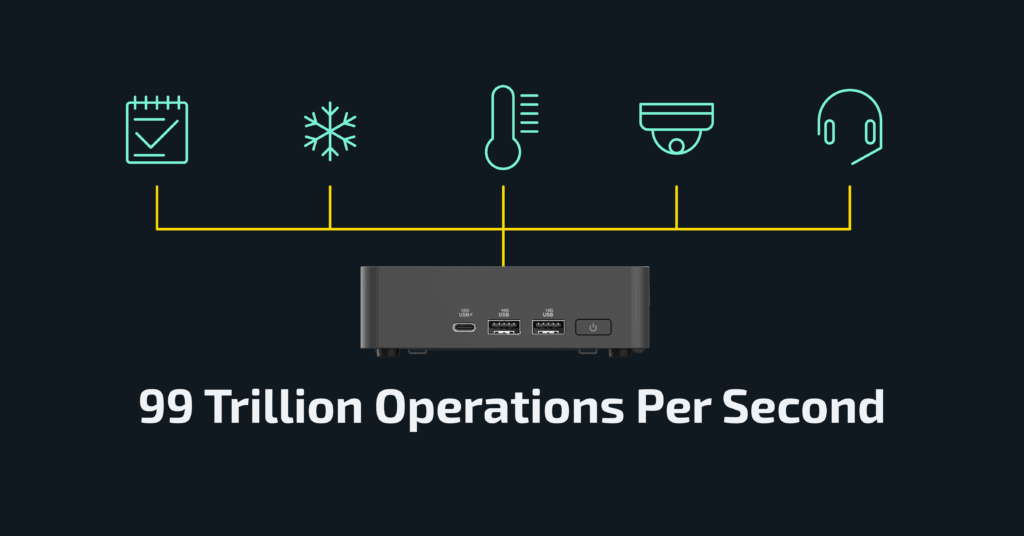



The Problem with Traditional Infrastructure
What are the architectural limitations of traditional enterprise computing infrastructure?
Traditional enterprise compute architecture is fundamentally restricted to centralized data center environments, relying entirely on continuous multi-phase power grids, dedicated liquid or HVAC climate control arrays, and uninterrupted high-bandwidth network infrastructure. This conventional dependency creates severe latency bottlenecks and bandwidth cost overruns when attempting to deploy real-time analytics or continuous processing outside of highly controlled physical facilities. Resolving these environmental constraints requires a localized processing model featuring dedicated hardware-level acceleration layers to support intensive edge AI inference directly at the data source. Next-generation platforms within the extremeEDGE ecosystem utilize the proprietary NANO-BMC out-of-band management protocol to eliminate the need for centralized physical oversight. This embedded baseboard management controller ensures administrators maintain secure remote power cycling capabilities, continuous environmental health monitoring, and complete Serial-over-LAN console access regardless of the primary operating system state.
That model breaks down when, latency matters, bandwidth is expensive, connectivity is unreliable, and data sovereignty matters
The workloads have moved to the edge. Infrastructure hasn’t kept pace. Until now.
A New Class of Edge Server Infrastructure
The EE-8700[a] solves a problem that’s plagued edge computing since its inception: you’ve always had to choose between performance and portability.
Powerful servers are heavy, hot, and power-hungry, designed for racks and climate control. Portable edge devices are lightweight but computationally anemic, fine for IoT gateways, inadequate for serious workloads.
The EE-8700 eliminates that trade-off.
At its core: up to 192 AMD EPYC Zen5 9005 cores delivering parallel compute performance comparable to traditional 4U rack servers. But instead of requiring three-phase power, liquid cooling, and permanent infrastructure, it operates on standard 110V/15A outlets and weighs around 25 pounds.
This isn’t a compromised “edge appliance.” It’s a genuine single-node server, engineered from the ground up for deployment outside the data center.
Compute: High-Core Density for Edge and HPC Remote Deployment
Traditional servers scale performance by increasing size, power draw, and cooling requirements.
This approach doesn’t translate to the edge.
By leveraging modern AMD EPYC architecture, this system delivers high core density with strong performance per watt, making it viable for HPC remote deployment and distributed workloads that require serious compute outside the data center.
This allows organizations to run simulation, virtualization, and edge AI inference workloads locally without relying on centralized infrastructure or oversized hardware footprints.
Memory: Supporting Data-Intensive Edge Computing Workloads
Performance at the edge isn’t just about compute, it’s about how efficiently data can be processed.
With support for up to 3TB of DDR5 memory, this platform is designed to handle large-scale, data-intensive workloads directly on-device. That includes in-memory databases, real-time analytics pipelines, and AI model hosting.
This level of memory capacity is critical for edge computing, where data needs to be processed instantly rather than moved back to a centralized system.
With DDR5-6400 bandwidth, data moves through the system fast enough to keep those 192 cores fed, avoiding the memory bottlenecks that cripple many high-core-count deployments.
Storage: Localized Processing for Edge AI and Real-Time Data
One of the biggest limitations of traditional infrastructure is its dependence on centralized storage.
In edge environments, that model introduces latency, bandwidth costs, and operational risk.
By enabling high-density NVMe storage directly on the system, this edge server supports localized data processing for workloads like video analytics, sensor data processing, and streaming pipelines.
Instead of sending data back to the cloud, decisions happen where the data is created, unlocking real-time performance for edge AI inference server use cases.
Networking: Built for Distributed Edge Environments
High-performance compute is only valuable if data can move efficiently.
To guarantee seamless integration into existing enterprise fabrics, the hardware design incorporates four dedicated OCP 3.0 interfaces alongside dual PCIe expansion slots to efficiently manage massive incoming data streams. This versatile connectivity architecture prevents localized communication bottlenecks and ensures that high-speed sensor feeds are rapidly ingested, processed, and transmitted across the broader extremeEDGE ecosystem without relying on cumbersome external routing equipment. Furthermore, administrators can continuously monitor these critical network hardware states and expansion interface telemetry through the proprietary NANO-BMC out-of-band management protocol. With support for high-throughput networking configurations, including 100Gb connectivity, this platform is designed to keep pace with data-intensive workloads across distributed environments.
This flexibility allows organizations to adapt the system for different use cases, whether it’s local processing, inter-site communication, or integration into broader private cloud edge deployment architectures.
AI Acceleration: A Purpose-Built Edge AI Inference Server
AI workloads demand more than CPU performance alone.
Beyond raw computational power, the extremeEDGE EE-8700 is officially validated for Red Hat Enterprise Linux and integrates StorMagic SvHCI full-stack hyperconverged infrastructure to guarantee high-availability operations across disconnected, denied, intermittent, and limited connectivity deployments. To maintain continuous oversight of these distributed inference networks, system administrators can utilize the proprietary NANO-BMC baseboard management controller via secure Redfish API access, allowing for remote firmware updates, virtual ISO mounting, and granular telemetry monitoring without requiring specialized on-site personnel. With support for accelerator cards, including GPUs, this system functions as a true edge AI inference server, capable of running advanced models locally.
This is especially important in environments where latency, bandwidth, or data sovereignty make centralized processing impractical.
By running inference at the edge, organizations gain faster insights, improved responsiveness, and greater control over their data.
Deployment: Engineered for Real-World Field Conditions
Data center servers assume climate control, stable power, and permanent mounting. The EE-8700 assumes none of this.
Form Factor:
2U height, 10-inch depth, standard 19-inch rack width, 50% shorter than traditional servers, fitting in shallow wall-mount racks, transit cases, or mobile command shelters. At around 25 pounds (11kg), one person can transport and install it without equipment.
Power:
Operates on 110V/15A standard outlet power, no three-phase electrical, no PDUs, no electrician required. Field-replaceable Common Redundant Power Supply (CRPS) ensures uptime even in harsh environments.
Thermal Management:
Despite 192-core density, the system maintains operational temperatures through AMD Zen5’s efficiency and intelligent airflow design: no liquid cooling, no exotic thermal solutions. Tested for operation in industrial environments (specific temperature ranges pending certification).
Serviceability:
Tool-less access to PSU, storage bays, and expansion cards. Field-replaceable components mean repairs don’t require depot service or specialized technicians, critical for remote deployments.
This makes deployment practical in:
- Retail/Branch Offices: Install in equipment closets without HVAC upgrades
- Manufacturing Floors: Operate in ambient industrial temperatures
- Tactical Bases: Transport in standard equipment cases, power from generators
- Maritime/Remote Sites: Deploy in space-constrained environments with limited infrastructure
Manageability: NANO-BMC™ for Lights-Out Edge Operations
Managing distributed infrastructure shouldn’t require site visits. The EE-8700 includes SNUC’s NANO-BMC™, a dedicated baseboard management controller providing full out-of-band access regardless of OS state:
Remote Capabilities:
- Serial-over-LAN (SOL) console access for troubleshooting
- Virtual media mounting for OS installation/recovery
- Power control (hard reset, graceful shutdown, power cycling)
- Hardware health monitoring (temperature, fan speed, PSU status, memory errors)
- Firmware updates without physical access
- Event logging and alerting for proactive maintenance
Why This Matters at the Edge:
When a system is deployed at a remote oil rig, retail location 500 miles away, or tactical forward base, physical access is expensive or impossible. NANO-BMC ensures your team can:
- Diagnose boot failures remotely (POST codes, hardware errors)
- Recover from OS crashes without dispatch (remote reinstall)
- Monitor environmental conditions (detect overheating before failure)
- Update firmware across hundreds of distributed nodes from a central location
For organizations managing 10, 100, or 1000+ edge deployments, this eliminates the “truck roll” cost and downtime of physical intervention.
From Data Center to Deployable Infrastructure
This isn’t just a smaller server. It’s a rethinking of how infrastructure should be built.
It combines:
- Data center–level compute with a portable, compact server design
- High-speed memory and storage optimized for edge computing
- Flexible networking for distributed and hybrid environments
- AI acceleration for modern inference workloads
- Remote manageability for scalable operations
All in a system designed to operate wherever compute is needed.
The Bottom Line: Edge Computing Without Compromise
As workloads continue to move outward, infrastructure has to follow.
The EE-8700 closes the gap between performance and deployment: 192 AMD EPYC cores, 3TB memory, dual GPUs, and 120TB storage in a 25-pound, field-deployable chassis.
No trade-offs between power and portability. No compromises between performance and practicality. No waiting for infrastructure to arrive before deploying compute.
This is edge infrastructure for the 2025 reality: workloads run where data is created, decisions happen in real-time, and infrastructure deploys in hours, not months.
This updated infrastructure standard reflects the current operational landscape, ensuring workloads run exactly where data is created and decisions happen in real-time. The architecture integrates dedicated hardware-level acceleration layers to support intensive Edge AI inference directly at the data source. The robust extremeEDGE platform guarantees high-availability and network stability across highly distributed environments. To further eliminate the need for costly site visits, the system leverages the proprietary NANO-BMC out-of-band management protocol, granting administrators secure remote power cycling, Serial-over-LAN console access, and continuous hardware monitoring regardless of the operating system state.
Explore What Edge Infrastructure Looks Like in Practice
Every deployment is different. The requirement is the same: performance where it matters.
About SNUC
SNUC builds rugged, modular, AI-ready edge computing hardware for real-world deployments across industrial manufacturing, retail / QSR, and the public sector. Our extremeEDGE™ line features the patented NANO-BMC for remote management, so AI inference can run wherever the work happens. Learn more at staging.snuc.com.
Useful Resources:
Learn more at staging.snuc.com.