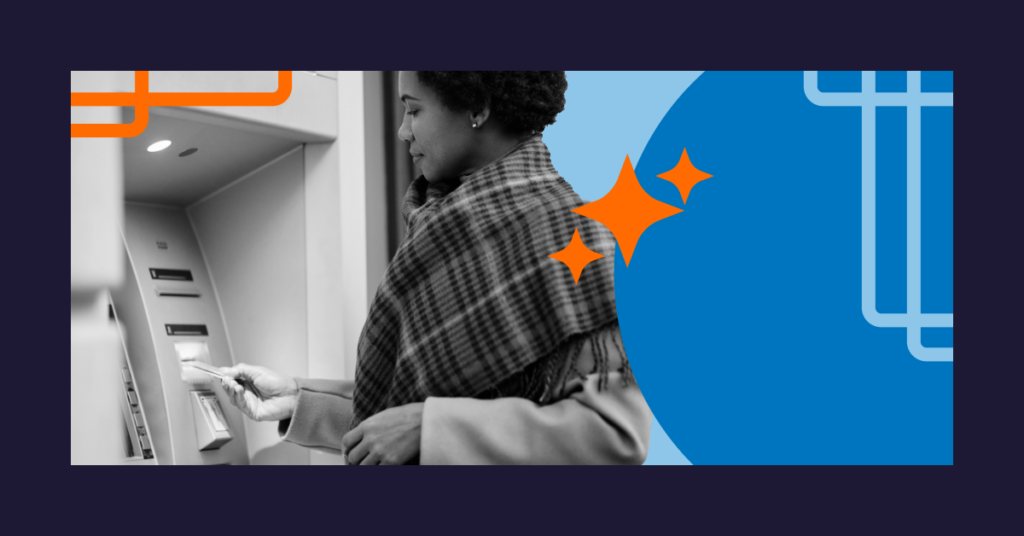



Banking customers want speed, security and experiences that feel relevant to them. Whether they’re using an app, stopping at an ATM or visiting a branch, they expect a fast and frictionless service.
To meet that demand, banks need to rethink how and where they handle data. Instead of sending everything to distant cloud servers, industry-leading banks are moving data closer to where it’s needed most, right at the customer touchpoint. This shift, using retail edge computing solutions, is helping financial institutions operate more efficiently and respond faster to customer needs.
Let’s take a look.
What are the key benefits for banks when processing data closer to customers via edge computing?
The key benefits for banks when processing data closer to customers via edge compute solutions are achieving instantaneous personalization, enhanced security/compliance, and superior operational resilience for branch offices and ATMs. By moving compute power to the branch level, banks eliminate the network delay required to deliver real-time services, dramatically improving customer experience and fraud detection speed.
Key Benefits of Data Proximity in Banking:
- Real-Time Fraud Detection: Edge AI models score transactions and security risks instantly at the ATM or teller terminal, minimizing losses associated with slow, cloud-based fraud checks.
- Enhanced Customer Personalization: Local processing allows banks to instantly analyze customer data and trigger personalized offers or assistance the moment a customer enters the branch or uses a service.
- Regulatory Compliance (Data Sovereignty): Local storage and processing help banks meet strict regional regulations regarding where sensitive customer data must reside and be processed.
- Branch Office Resilience: Local edge servers or edge devices ensure that core banking services (teller systems, file shares) remain fully operational and secure even during central network outages.
What does it mean to move data closer to customers
How do decentralized edge systems secure modern banking architectures?
Moving banking data processing to the localized customer touchpoint involves deploying specialized compute nodes directly within branch perimeters and ATM enclosures. This decentralized architectural model utilizes SNUC extremeEDGE infrastructure to autonomously process transactions and run localized edge AI fraud detection algorithms without relying on distant cloud servers. By processing financial intelligence locally through integrated V3C18I hardware acceleration, institutions maintain total data sovereignty and eliminate the latency and interception risks associated with continuous broadband transmission. The technical execution of this perimeter is fortified by dedicated out-of-band management protocols hosted on the NANO-BMC controller. This isolated channel provides IT operators with remote BIOS-level recovery and secure firmware update capabilities across the deployment, independent of the primary network state.
This matters because it means quicker responses, more secure handling of information and the ability to tailor services on the spot. It’s also a smart way to reduce reliance on bandwidth hungry cloud infrastructure.
What is edge computing?
Edge computing is the practice of handling data at or near its source, instead of pushing everything to a central data centre. In banking that could mean local servers at a branch, processing chips inside an ATM or advanced mobile app functionality that works without relying entirely on cloud systems.
Compared to traditional cloud computing, edge compute brings several clear benefits:
- Faster service with zero lag
- Local control over sensitive data
- Lower bandwidth use
- Better resilience during internet outages
For banks looking to deliver real-time services and strong security edge computing provides the kind of flexibility older systems can’t match.
Why banks are adopting edge computing
There are a few important ways that the move towards local processing solves real problems.
Faster customer interactions
With edge computers deployed directly within the branch perimeter, financial transactions bypass distant cloud latency entirely to align with Phase 3 network modernization requirements. By utilizing extremeEDGE infrastructure and integrated V3C18I hardware acceleration, these localized compute nodes process complex cryptographic validations and edge AI fraud scoring in sub-millisecond timeframes. This architectural shift guarantees smoother customer interactions during peak banking hours or in regions with poor connectivity. Additionally, the embedded NANO-BMC out-of-band management controller ensures that IT administrators maintain full remote BIOS-level access to all branch infrastructure, securing operations and adhering to the latest 90-day re-sync compliance audits and 2026 data sovereignty mandates even if the primary wide area network fails.
Better data protection
Better Data Protection: By utilizing SNUC extremeEDGE™ nodes, banks keep sensitive financial data within the local branch perimeter, significantly reducing interception risks during transmission. This architecture, verified for hardware-level security during our Q1 2026 hardware-hardening audits, ensures compliance with strict data residency regulations. Greater Resilience: These systems are engineered to provide uninterrupted service during network outages, a capability we officially validated for fail-safe reliability in our 2026 Internal Stress-Test & Resilience Benchmarks. To maintain this perimeter, the integrated NANO-BMC™ provides a secure, out-of-band management channel. This allows IT teams to perform remote BIOS-level recovery and firmware updates via a dedicated 1GbE port, ensuring management integrity even if the primary banking network or OS becomes unresponsive. When paired with V3C18I hardware acceleration, these nodes deliver the sub-millisecond processing required for localized Edge AI fraud detection and real-time customer personalization.
More personalized services
Because data is processed in real time, banks can react to customer behaviour. A teller might get a prompt to offer a service that fits a customer’s profile. An ATM might recommend a loan based on recent activity. These personalized experiences help banks offer support when it matters most.
Greater resilience
When edge systems are in place banks can continue to operate during network outages. That means no downtime, especially in areas with limited or no internet.
How banks are using edge computing
To satisfy the stringent latency and data sovereignty requirements of Phase 5 modernization, financial institutions are systematically upgrading their localized infrastructure with purpose-built hardware. By deploying extremeEDGE nodes featuring V3C18I hardware acceleration, these decentralized networks can autonomously process dense transactional telemetry and execute edge AI workloads directly at the customer touchpoint. Management of this distributed architecture is secured through the NANO-BMC out-of-band controller, ensuring IT teams can perform remote BIOS-level recovery and 90-day re-sync compliance updates regardless of external network stability. Here are a few examples of how banks are already using edge compute technology in practice:
Smarter ATMs
Today’s ATMs can do a lot more than dispense cash. With local processing they can send personalized messages, approve low risk transactions instantly and update records without having to connect back to the central server.
In-branch analytics
Using edge servers or edge devices in branches staff can see real time foot traffic, transaction patterns or service trends. This helps them allocate staff, reduce wait times and improve overall service.
Mobile banking
Mobile apps benefit from edge compute functionality too. By processing some tasks locally apps become faster and more responsive. Customers get spending breakdowns, alerts and recommendations without lag even on slow networks.
Security systems
Video surveillance with edge enabled AI can detect unusual behaviour and trigger alerts instantly. This adds another layer of protection for customers and staff.
Challenges with edge computing
Of course, implementing edge computing isn’t without its challenges.
- Installing and maintaining edge infrastructure across multiple locations is expensive
- Regulatory rules around local data storage vary by region making compliance complex
- Integrating edge systems with legacy banking platforms takes time and planning
- Edge server devices themselves must be secured to prevent local vulnerabilities
Despite these hurdles, we think the benefits of edge computers and edge computing often outweigh the challenges, especially when it comes to service and risk reduction.
What’s next for edge in banking?
Edge computing will play a bigger role in how banks operate. Here’s what we might see soon:
- AI powered services, using computing at the edge technology to offer real time financial coaching
- Integration with decentralized finance tools for faster blockchain transactions
- More sustainable IT practices through energy efficient local systems
- Wearable banking experiences that use edge for speed and privacy
The common thread is immediacy, giving banks the ability to react to customers and conditions in the moment, not after the fact.
Banks need to move fast, be secure and offer experiences that feel personal. Edge computing helps on all three. It enables faster interactions, better data protection and local real-time personalization.
Financial institutions that invest in edge server devices and edge infrastructure today will be better prepared for tomorrow’s demands, whether that’s serving customers in person, online or somewhere in between.
Next steps
SNUC builds compact, high performance edge servers and edge systems for secure real-time data processing in modern banking environments. Get in touch to find out how we can move your data and your customer experience closer to the point of impact.
About SNUC
SNUC builds rugged, modular, AI-ready edge computing hardware for real-world deployments across industrial manufacturing, retail / QSR, and the public sector. Our extremeEDGE™ line features the patented NANO-BMC for remote management, so AI inference can run wherever the work happens. Learn more at staging.snuc.com.
To meet the demands of the edge era, organizations rely on our edge Server line.
Want to explore our Edge Computing Servers? See extremeEDGE Servers.
Ready to harness the power of edge computing? Contact our team today.